Insight details
Last updated: June 28, 2026.
A China freight forwarder or China shipping agent can arrange freight, booking, transport documents, and shipment routing. But the forwarder cannot fix unclear supplier information at the last minute. Before handoff, the buyer still needs clean cargo data, supplier contacts, packing details, inspection status, warehouse arrangements, and document expectations.
Many shipment problems start before the freight forwarder receives the file. The supplier quote is unclear. The Incoterm is not checked. Carton sizes are missing. Goods from several suppliers arrive at different times. Labels are wrong. The packing list does not match the cargo. By the time the forwarder asks for details, everyone is already rushing.
For buyers managing their first import order, shipment handoff is only one stage of the full process. See our guide on how to import goods from China: a first-order workflow.
Use this checklist before handing a China order to a freight forwarder, shipping agent, warehouse, or loading team.
Freight forwarder China vs China shipping agent
A freight forwarder China service usually helps arrange international shipping, booking, cargo pickup or delivery, transport documents, and coordination with carriers or agents. A China shipping agent may do similar work, depending on the company and route.
For buyers, the title matters less than the scope. Ask whether the provider handles pickup, export documents, customs coordination, warehouse receiving, consolidation, loading, bill of lading, air waybill, insurance, destination handoff, or only freight booking.
If the problem is supplier communication, sample status, production delay, packing mismatch, or warehouse receiving, a freight forwarder may not be enough. You may need China-side sourcing or trade execution support before shipment.
Confirm the trade term first
Before the forwarder quotes or books anything, confirm the trade term. The International Chamber of Commerce explains that Incoterms 2020 help define buyer and seller responsibilities worldwide.
Ask the supplier what term applies:
- EXW factory or warehouse.
- FOB Shanghai, Ningbo, Shenzhen, Guangzhou, Qingdao, or another port.
- CIF destination port.
- DAP buyer address or project site.
- Another agreed term.
The term affects who handles pickup, local delivery, export handling, freight, insurance, destination charges, import clearance, and final delivery. A forwarder needs this before quoting properly.
Prepare supplier and cargo information
Create one shipment file before handoff. Include:
- Buyer name and contact.
- Supplier name, address, contact person, phone, and email.
- Product name and SKU.
- Quantity by SKU.
- Carton count.
- Units per carton.
- Gross weight and net weight.
- Carton dimensions.
- Total volume.
- Ready date.
- Pickup address or warehouse address.
- Destination country, port, airport, warehouse, or final address.
- Trade term and named place.
- Required shipping method.
This list sounds basic because it is. Missing basics cause delays.
Check packing before pickup
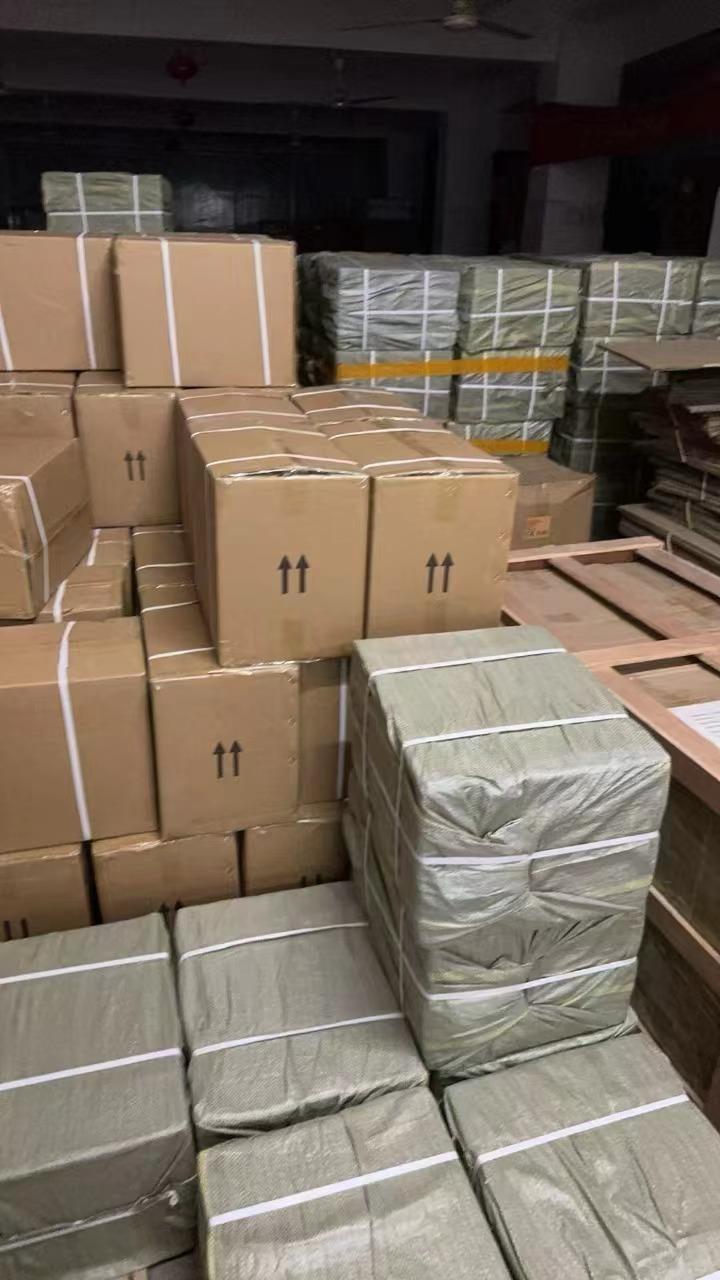
The forwarder needs cargo details, but the buyer should still check whether the packing is suitable. A weak carton can fail even if the product is acceptable.
Before pickup, ask for:
- Packing photos.
- Carton label photos.
- Shipping marks.
- Pallet photos if pallets are used.
- Carton dimensions.
- Gross weight per carton.
- Packing list draft.
- Any fragile, battery, liquid, magnetic, oversized, or regulated cargo notes.
If goods need repacking, relabeling, palletizing, or SKU separation, arrange that before loading day.
Connect inspection status with shipment timing
If pre-shipment inspection is needed, do not let the supplier release goods before the buyer reviews the result. Inspection should happen when enough finished goods are available and before balance payment or shipment where possible.
ISO describes ISO 2859-1:2026 as an acceptance sampling standard for inspection by attributes. In practice, the buyer should still define product-specific checkpoints: appearance, size, function, quantity, labels, packaging, accessories, and known risk points.
Tell the forwarder whether goods are approved, pending inspection, pending correction, or waiting for reinspection. Shipment pressure should not bury a quality issue.
For a detailed inspection process before shipment, see our pre-shipment inspection checklist for China orders.
Prepare commercial documents early
The International Trade Administration lists common export documents such as commercial invoice, bill of lading, and packing list in its export documentation guidance. Exact requirements depend on the product and destination.
Before shipment, prepare or request:
- Commercial invoice.
- Packing list.
- Proforma invoice if needed.
- Bill of lading or air waybill details.
- Certificate of origin if required.
- Product test reports or certificates if relevant.
- HS code suggestion from supplier.
- Importer details and tax ID if required by destination.
- Label or compliance documents if destination rules require them.
The supplier's suggested HS code is not final legal advice, but it gives the forwarder or customs broker a starting point.
Multiple suppliers need a warehouse plan
If goods come from several Chinese suppliers, do not ask each supplier to ship separately unless that is the plan. A warehouse or consolidation point may be cleaner.
For each supplier, record:
- Ready date.
- Delivery method.
- Carton count and weight.
- Product and SKU.
- Warehouse arrival date.
- Visible carton damage.
- Label status.
- Missing or extra quantity.
Once all goods arrive, prepare a consolidated cargo list for the forwarder. This reduces confusion when booking freight or loading a container.
For detailed warehouse receiving, repacking, and supplier consolidation steps, see our guide on how to consolidate goods from multiple suppliers in China.
What the forwarder needs before booking
Before a China freight forwarder books a shipment, provide:
- Cargo ready date.
- Pickup or warehouse address.
- Destination port, airport, or final address.
- Total cartons, weight, and volume.
- Product description.
- HS code if available.
- Cargo type and restrictions.
- Incoterm and named place.
- Required shipping method.
- Supplier contact and warehouse contact.
- Document requirements.
- Whether inspection is complete.
If the forwarder has to chase every supplier for basic information, shipment planning will be slower and mistakes become more likely.
When sourcing support should stay involved
Sometimes the buyer thinks the order is ready for a freight forwarder, but supplier-side details are still unfinished. For example, the supplier has not packed the goods, the packing list does not match, labels are missing, or inspection has not been arranged.
In that case, China-side sourcing or trade execution support should stay involved until the cargo is ready for shipment handoff. The forwarder can arrange freight. The sourcing side helps make sure the supplier, warehouse, packing, inspection, and cargo details are ready for the forwarder.
How Alex Trading Group can help
Alex Trading Group supports buyers with the China-side work that often comes before freight booking: supplier follow-up, production status, inspection coordination, warehouse receiving, carton checks, repacking, consolidation, loading preparation, and shipment planning.
If you are still choosing suppliers, review factory-direct sourcing and supplier search support. If suppliers are selected but details are unclear, review trade execution support. If goods are close to moving, review inspection, warehouse, and shipment support.
You can send your shipment details with supplier contacts, product list, carton data, destination, forwarder details, inspection status, and the question you need resolved.
FAQ
What does a China freight forwarder do?
A China freight forwarder can help arrange freight booking, pickup, transport documents, export coordination, carrier communication, and shipment routing. The exact scope depends on the forwarder and trade term.
Is a freight forwarder the same as a sourcing agent?
No. A freight forwarder mainly handles shipment movement and documents. A sourcing agent helps with supplier search, supplier follow-up, quotation review, samples, production, inspection, warehouse, and shipment preparation.
What should I send a China shipping agent before booking?
Send supplier contacts, pickup address, cargo ready date, product description, carton count, gross weight, dimensions, destination, Incoterm, packing list, commercial invoice details, and inspection status.
When should warehouse consolidation be arranged?
Arrange warehouse consolidation before suppliers finish production. The warehouse needs supplier delivery schedules, carton details, labels, receiving rules, and loading plans before goods arrive.