Insight details
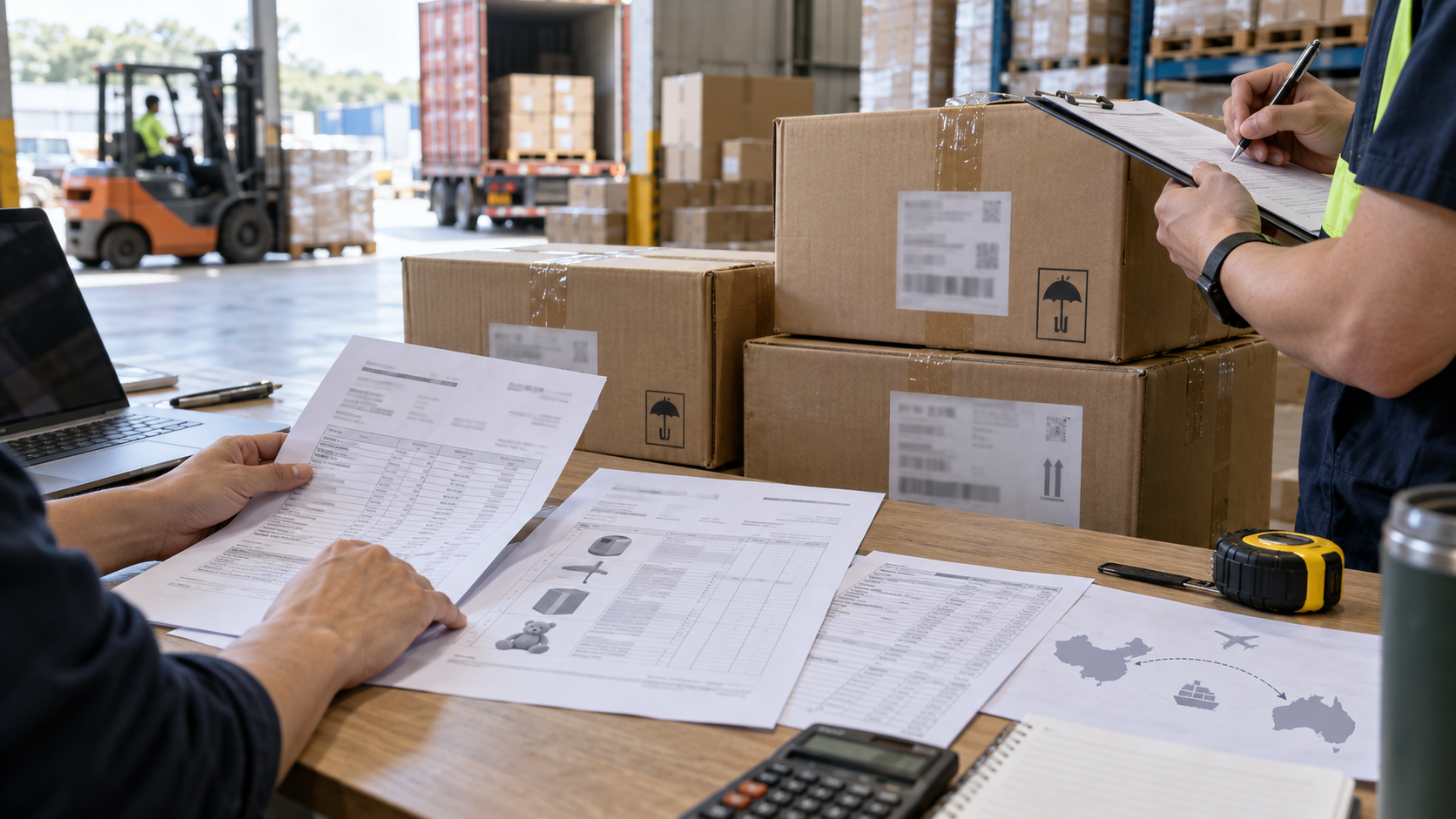
Before you ask factories for prices, decide what has to be imported, who will be the importer in the destination country, and what information must be correct before money moves. That is the starting point for how to import goods from China. A supplier name is useful, but it is only one part of the route.
Many first-time buyers start with a simple question: how do I import from China without missing something expensive? The answer is not a single platform or a single shipping term. It is a sequence of checks: product definition, supplier fit, quote scope, sample approval, production follow-up, shipment handoff, and destination customs preparation.
A practical first-order workflow is:
- Define the product and destination market.
- Check import, labeling, testing, and importer requirements.
- Build and verify a comparable supplier shortlist.
- Clarify quotation scope, payment terms, and Incoterms.
- Approve samples and record the bulk-production standard.
- Follow production and prepare the shipment handoff before goods are finished.
- Complete the customs and shipping file before cargo leaves China.
Start with the product, not the supplier name
A product photo is a start, but it is not enough for a factory quote or a customs file. Before you import products from China, write down the product name, material, size, use, packaging, target quantity, destination country, and any required labels or test standards.
For simple goods, this may fit in one page. For custom goods, add drawings, tolerance notes, color references, logo position, packaging artwork, and sample history. The goal is to make every supplier quote the same requirement. If one supplier quotes painted steel, another quotes stainless steel, and a third excludes packaging, the cheapest price tells you very little.
This product file also helps your customs broker or freight forwarder. Commodity codes, duty rates, import controls, and documents depend on the exact product and destination market. Do not leave classification questions until the cartons are ready.
Check whether your destination market has import rules
Importing from China to the USA, UK, India, or another market starts with the buyer's country, not only with the Chinese supplier. The same product can face different commodity codes, duty rates, marking rules, safety standards, or importer registration requirements depending on destination.
For the United States, importers should understand CBP procedures and the information needed for entry, including classification, value, country of origin, and admissibility. For the UK, buyers use the Trade Tariff to look up commodity codes, duty, VAT, and controls. For India, an Importer Exporter Code is normally part of the import setup, and customs filing uses Bill of Entry processes through ICEGATE and related customs systems.
A supplier may know Chinese export documents, but the supplier is usually not responsible for your destination-country compliance. Ask your customs broker early if the product needs certificates, labeling, testing, import registration, or special permits.
Build a shortlist you can compare
Do not send vague messages to ten suppliers and then compare whatever comes back. Choose a smaller supplier shortlist and give each one the same product file. Ask whether they are a manufacturer, trader, or specialist workshop. Ask what part they make themselves, what they outsource, and what products they have shipped before.
Before paying a deposit, buyers should verify supplier identity, production capability, and order details. See our guide on how to check a Chinese supplier before paying a deposit.
A supplier comparison should include more than unit price. Check MOQ, tooling or mold cost, sample cost, payment terms, lead time, packaging, quality control process, inspection access, export experience, and communication speed. If the supplier avoids basic questions before deposit, that pattern may get worse during production.
For buyers asking what to import from China, this step is also a reality check. A product idea is only workable if suppliers can make it at the required quantity, quality level, compliance level, and landed cost.
Make each quote usable before comparing prices
A China supplier quote should tell you what is included. At minimum, clarify the product specification, material, packaging, MOQ, unit price, mold or setup fee, sample fee, production lead time, payment terms, trade term, pickup or loading location, and quote validity.
For a detailed explanation of EXW, FOB, CIF, and DAP quotation differences, see our guide on what buyers should clarify in a China supplier quote.
Trade terms matter. EXW, FOB, CIF, and DAP can make the same product look cheaper or more expensive because the included responsibilities are different. Incoterms define buyer and seller responsibilities when used correctly in the contract, but they do not replace customs classification, product compliance, or local tax advice.
If a quote says FOB, ask which port. If it says EXW, ask for the factory address and whether export customs documents are included. If it says CIF or DAP, ask what destination charges, customs clearance, duty, tax, and local delivery work remain on your side.
Use samples as a control point
Samples are not only for checking whether you like the product. They should define what bulk production must match. When you approve a sample, record photos, measurements, material notes, color, finish, packaging, defects, and any changes you requested.
Ask whether the sample was made by the same factory and process planned for bulk production. A hand-made sample can look fine while mass production still needs different tooling, fixtures, material batches, or packaging tests.
Before paying a deposit, connect the approved sample to the purchase order. The supplier should know which version is approved, what changes are pending, and what evidence they must provide during production.
For a detailed approval checklist, see our guide on what to check before approving a sample for bulk production.
Arrange shipment handoff before goods are finished
Shipping should not begin as a last-week scramble. Before production finishes, confirm carton quantity, gross weight, carton dimensions, packing list format, shipping marks, pickup address, cargo ready date, and forwarder contact.
If you use multiple suppliers, decide whether goods go directly to port, to a forwarder's warehouse, or to a China-side consolidation warehouse. Mixed supplier orders need receiving records, carton checks, repacking decisions, label control, and a loading plan. Without that, the forwarder may receive goods but not know what is missing, damaged, mislabeled, or not ready.
For multi-supplier orders, see our guide on how to consolidate goods from multiple suppliers in China.
This is where many import from China projects lose visibility. The supplier says the goods are ready, the forwarder asks for documents, the buyer waits for photos, and no one has checked whether the carton data matches the commercial invoice and packing list.
Prepare the customs file early
Your customs file should be built while the order is still controllable. Collect the commercial invoice, packing list, product description, material details, HS or commodity code suggestion, country of origin, supplier details, payment terms, Incoterm, and transport documents. For regulated goods, add test reports, certificates, labeling files, or broker instructions where required.
Do not ask the supplier to invent a vague goods description to make documents easier. Customs descriptions should match the actual goods. If the broker needs a better product description, clarify it before shipment.
The country route matters. How to import from China to India can involve different registration and filing steps from importing from China to the USA or UK. The same factory invoice may need different supporting details for each destination.
Where China-side follow-up helps
A buyer can manage a simple repeat order directly when the supplier is trusted, the product is familiar, and the import route is already tested. Support becomes useful when the order has uncertain suppliers, unclear quotes, samples, packaging changes, production updates, inspection timing, warehouse receiving, or shipment handoff questions.
Many overseas buyers use a China sourcing agent when they need supplier communication, quotation review, sample follow-up, inspection coordination, and shipment support. Learn more about what a China sourcing agent does for overseas buyers.
Alex Trading Group can help buyers review supplier information, clarify quotes, coordinate samples, follow production details, and connect the order file with inspection, warehouse, loading, and shipment preparation. If your order is already moving from supplier search into execution, review our trade execution support to see where China-side follow-up fits.
What to send for a first import review
Send what you already have. A complete purchasing plan is not required.
Useful files include product photos, drawings, supplier links, quotations, chat screenshots, sample notes, target quantity, destination country, packaging needs, shipment plan, and the question you need answered first. If you are comparing suppliers, include all quotes in one file. If you are preparing shipment, include carton data, packing list drafts, and forwarder details.
You can send those details through the sourcing inquiry form. The first review should identify what is clear, what is missing, and what should be checked before deposit, production, final payment, or shipment.
FAQ
What is the first step to import goods from China?
Start with a clear product file and destination country. Supplier search, quote comparison, sample approval, shipping, and customs preparation all depend on those two details.
Can I import from China without visiting suppliers?
Yes, many buyers do. Remote sourcing still needs supplier checks, written specifications, sample control, production updates, inspection planning, and shipment document review.
Should I ask a customs broker before paying the supplier?
For regulated goods, unfamiliar products, or a new country route, yes. A broker can help you check classification, documents, importer requirements, duty, tax, and admissibility before the order becomes hard to change.